Stone Author · sample slab
African St Laurent, Warped
One authored marble slab, shown four ways — pristine, subtly wrong, screaming, and turned inside out.
The fiction it was authored to: stone cut from a volume of space the warp got into. The scorch at the central junction is where something older held that zone — a wound that is also a protection. Ordinary eyes see the burned slab in daylight. A psyker sees what is under it. Same stone, same geometry, two sights.
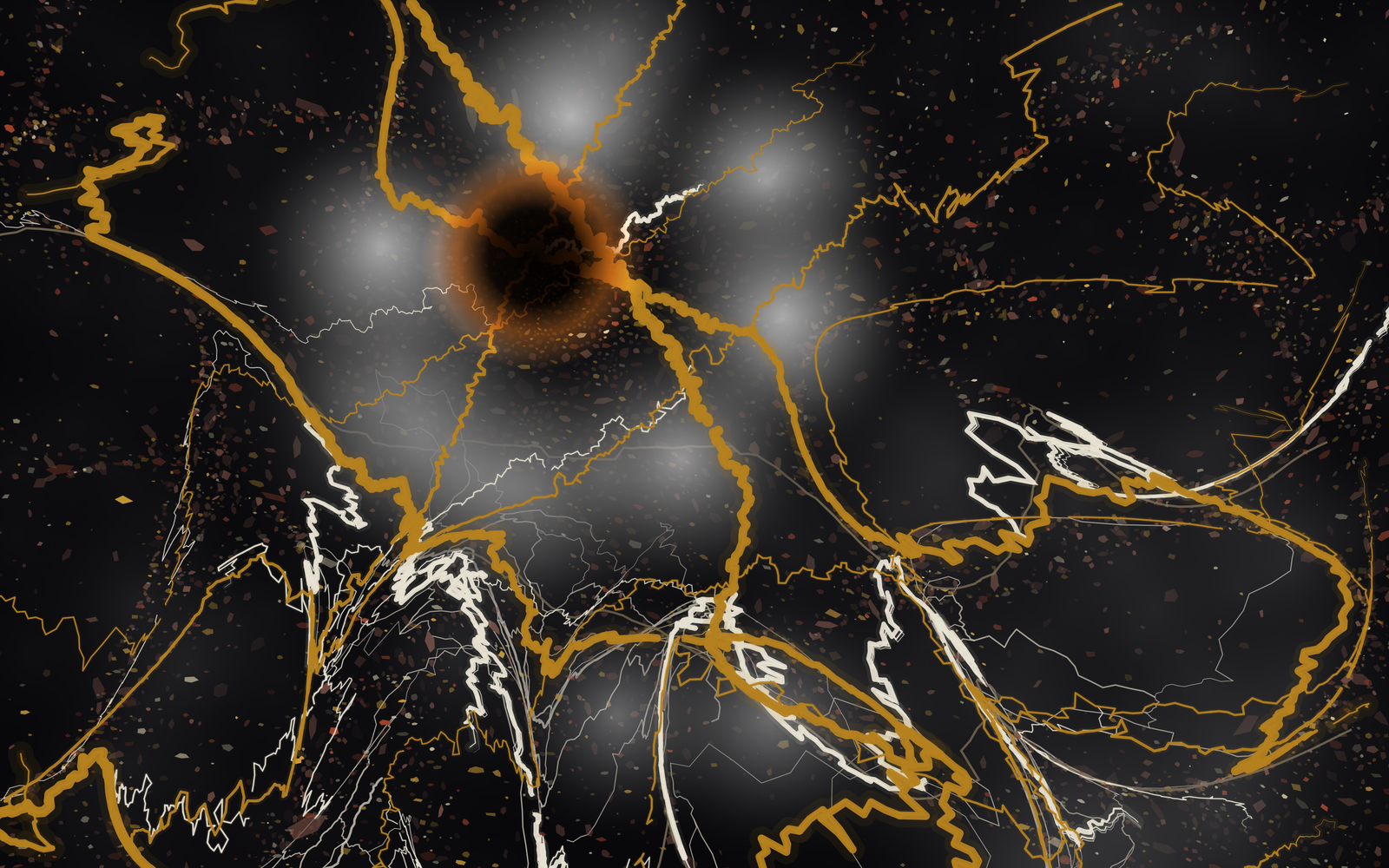
Daylight — and the mark
Gold and white running over near-black granite. The scorch sits where the veins meet, and reads as damage.
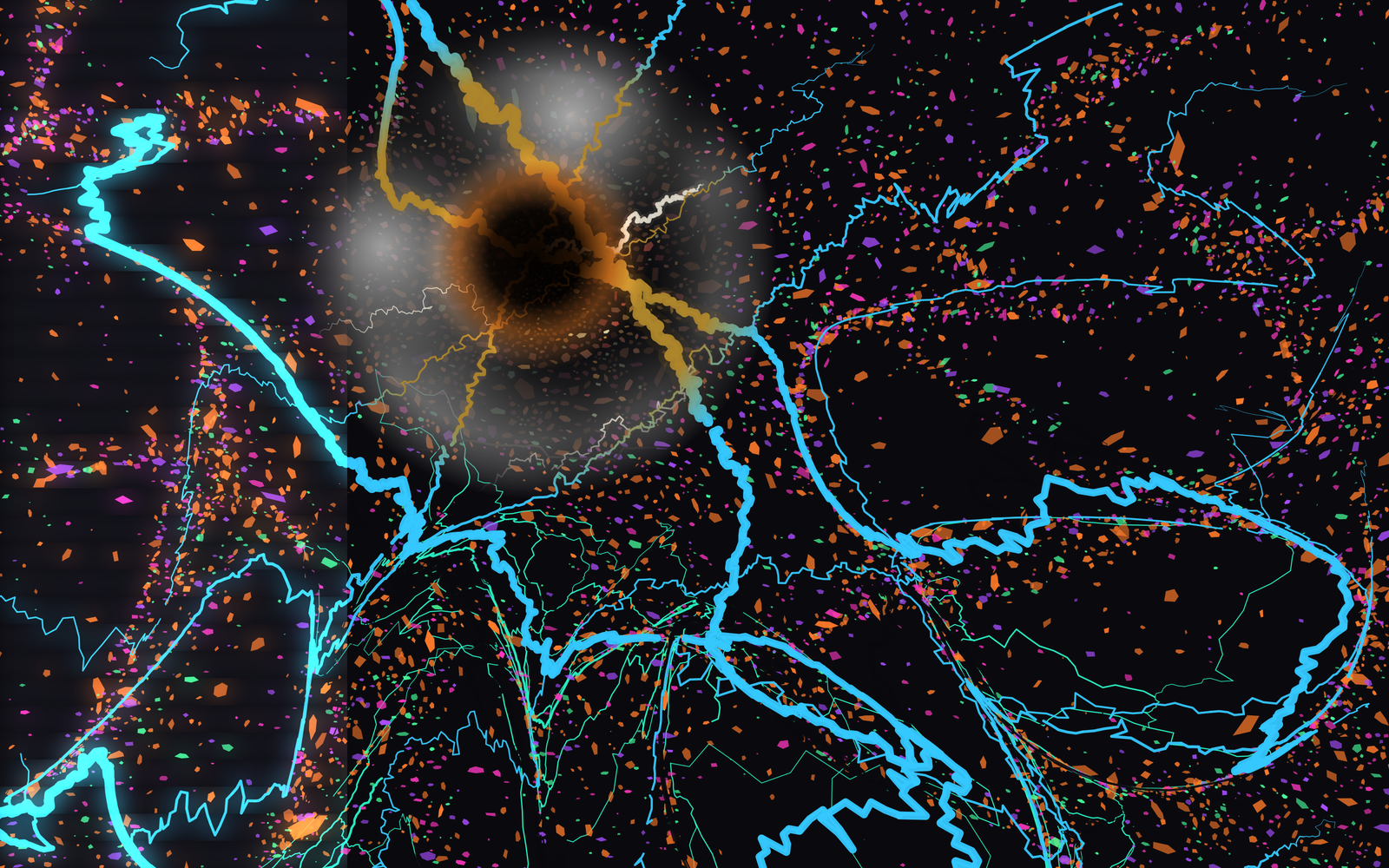
The other spectrum — and what the mark is
The same geometry, screaming. And around the scorch, a held circle of ordinary daylight stone: the mark is not the damage, it is the thing keeping the damage out.
composited Both of those come off the same 65,535 × 40,959 master — 2.68 gigapixels, rendered as a grid of tiles straight to a tiled BigTIFF and downsampled here to 1600 px. The burn is painted on after the render: it is the one thing on this page the slab does not contain. Everything else — every vein, speck, fog bank and the entire spectrum change — is the renderer. The unburned masters are at the bottom of this page.
Stone Author draws stone as vector geometry, not pixels: veins, specks, fog and warp are a
few thousand simple shapes driven by a small recipe. The recipe — a .json slab — is the master,
and the render is a deterministic function of it: within one browser build the same slab renders
byte-identical every time — the gallery harness gates exactly that, twice from a fresh load — and the same
geometry can be drawn at any size. Across browser builds the picture is the same and the bytes are not, because
sub-pixel anti-aliasing moves; that comparison is recorded rather than gated. The four steps below came off two
slabs, rendered at 1600 × 1000; the post-steps that three of them add are recorded in
reference.json, parameter by parameter.
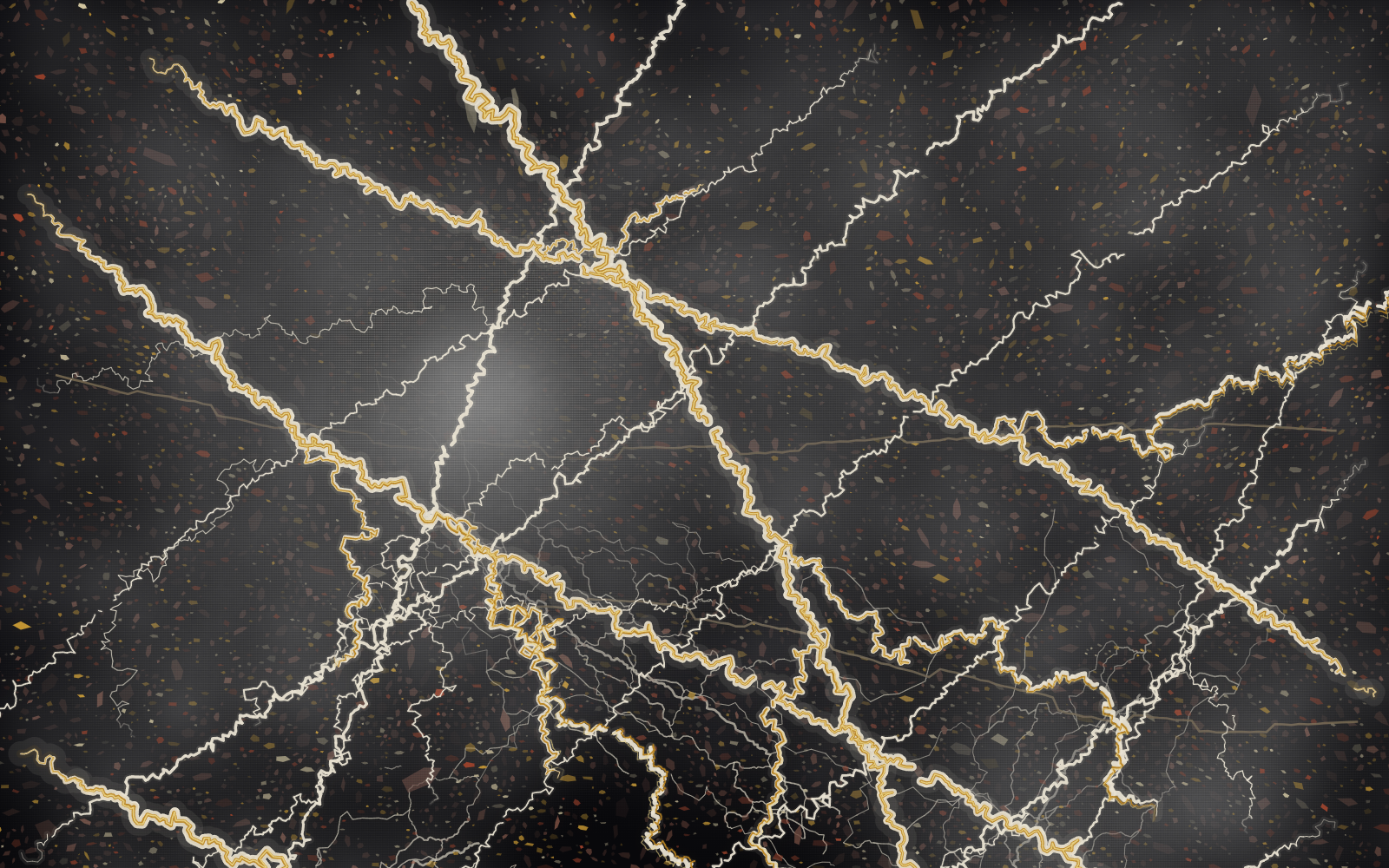
Pristine — no warp, no burn
The married gold-and-white fracture network on near-black granite, exactly as authored. The base state the other three happen to, and the only picture here that is nothing but a slab and a renderer.
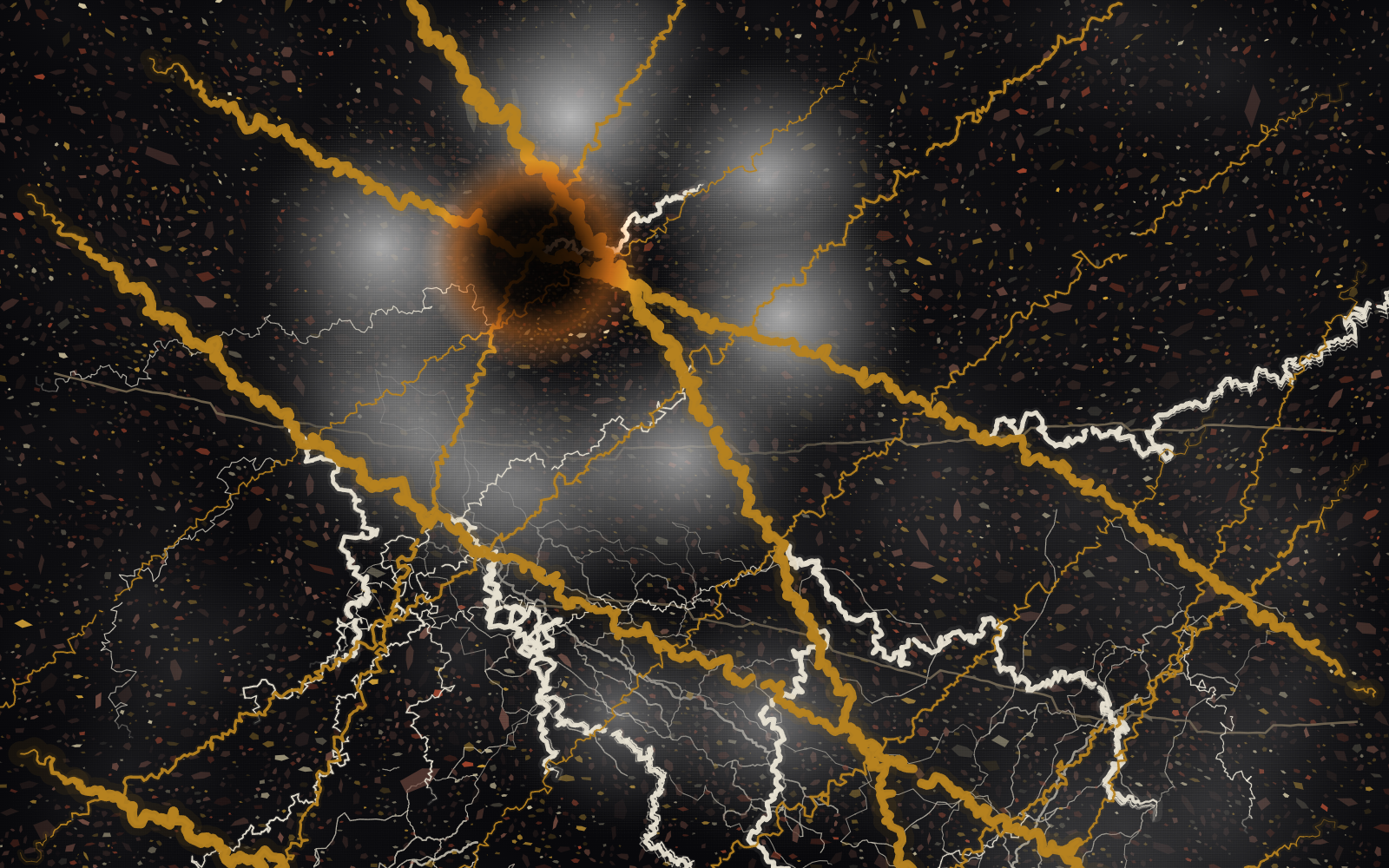
What people see — subtly wrong
The same stone warped about 1.5% and scorched at the junction. Nothing you can point to, but the eye knows the veins don't quite land where they should.
Daylight and psyker are the same slab. One authored geometry, two lights: at rest it's near-true; under the other spectrum the full distortion it was always carrying is exposed.
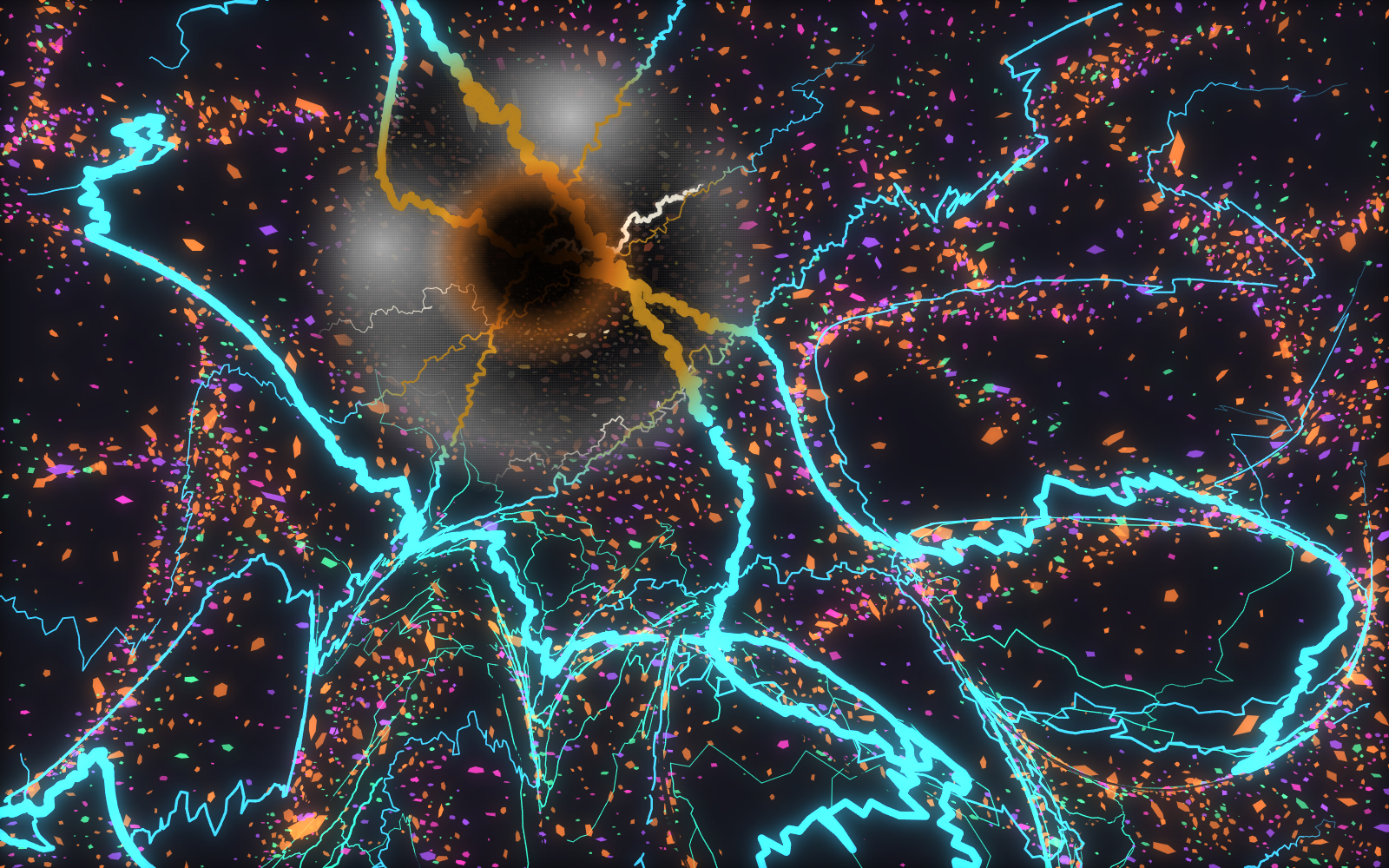
What a psyker sees — screaming
The same slab at full warp, recoloured into emission: gold veins fire electric cyan, the granite scatters in neon. The burn holds as an island of normalcy — a window where the warp never reached, so real daylight stone shows through the screaming.
Then turn the mask inside out. The same disc, in the same place, asked the opposite question: not what did the warp fail to reach but what is the only thing it reached.
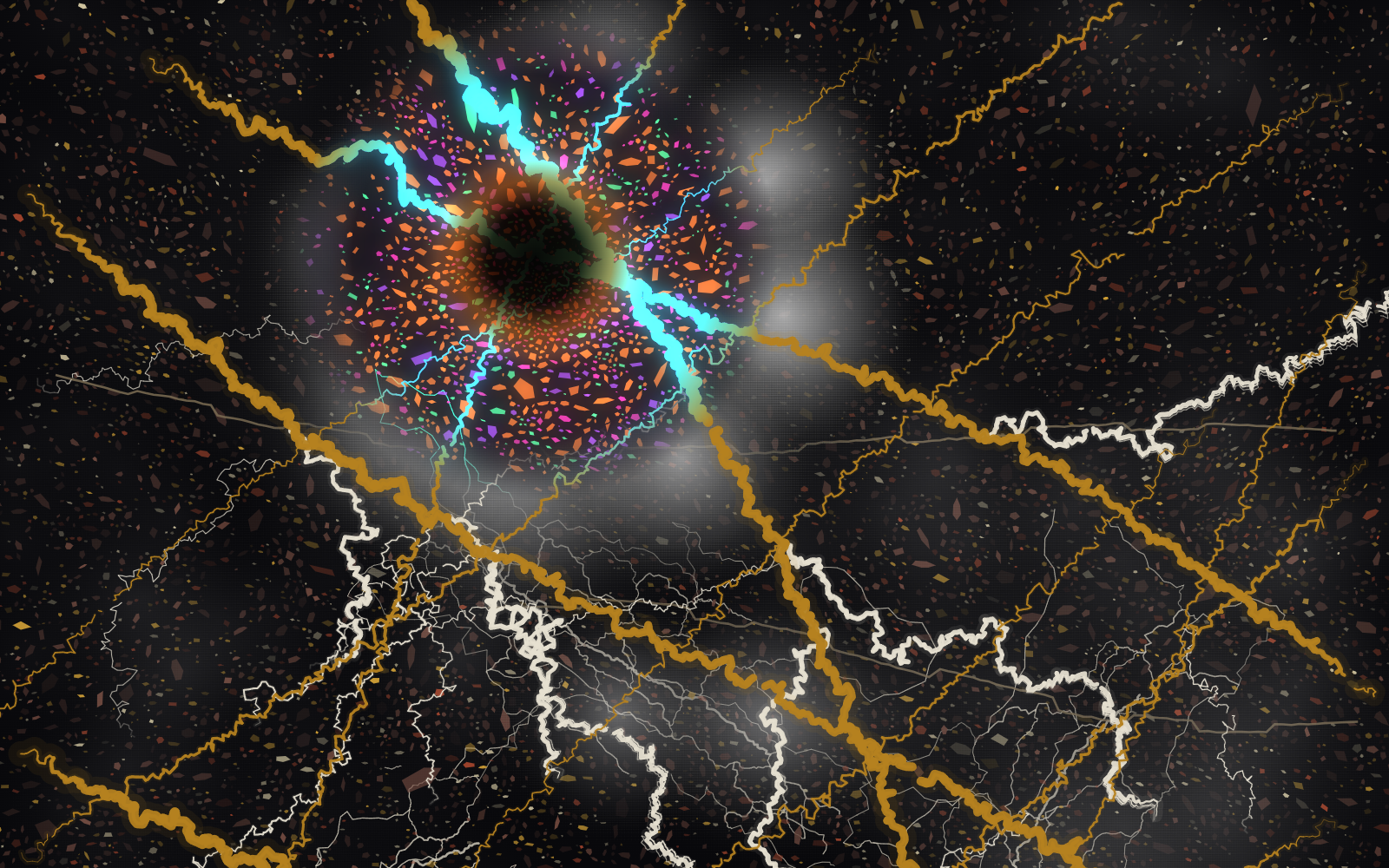
A window into chaos — the mask, inverted
The same slab, the same burn, the same disc — but the mask now inverts. The warp is permitted only inside that circle, so the stone around it holds perfectly still: gold and white veins running straight across the granite, in daylight. And the disc looks out on the psyker spectrum. Not an island of calm in a screaming field — a hole in an otherwise ordinary slab, with the screaming on the other side.
The masters, unmarked
pure render Two slabs under two lights, with nothing
added — no burn, no compositing, no retouch. All four were cut on one machine on one afternoon, on the same
build, and downsampled to 1600 px from masters of up to 2.68 gigapixels. Each carries its own record of the
render that made it — build, engine, hardware class, tile plan, per-tile timings, and a device identity sealed
under the slab's own bytes — readable with node tools/tiff-meta.mjs <file>, which is how
every figure published about this renderer is checked.
The pristine slab — nothing has happened to it
The same geometry as hero 01, rendered as a master rather than at 1600 px. Under the other spectrum it has nothing to declare: no emission colours are defined for it, so what is left is the stone's own relief under a light that none of it answers.
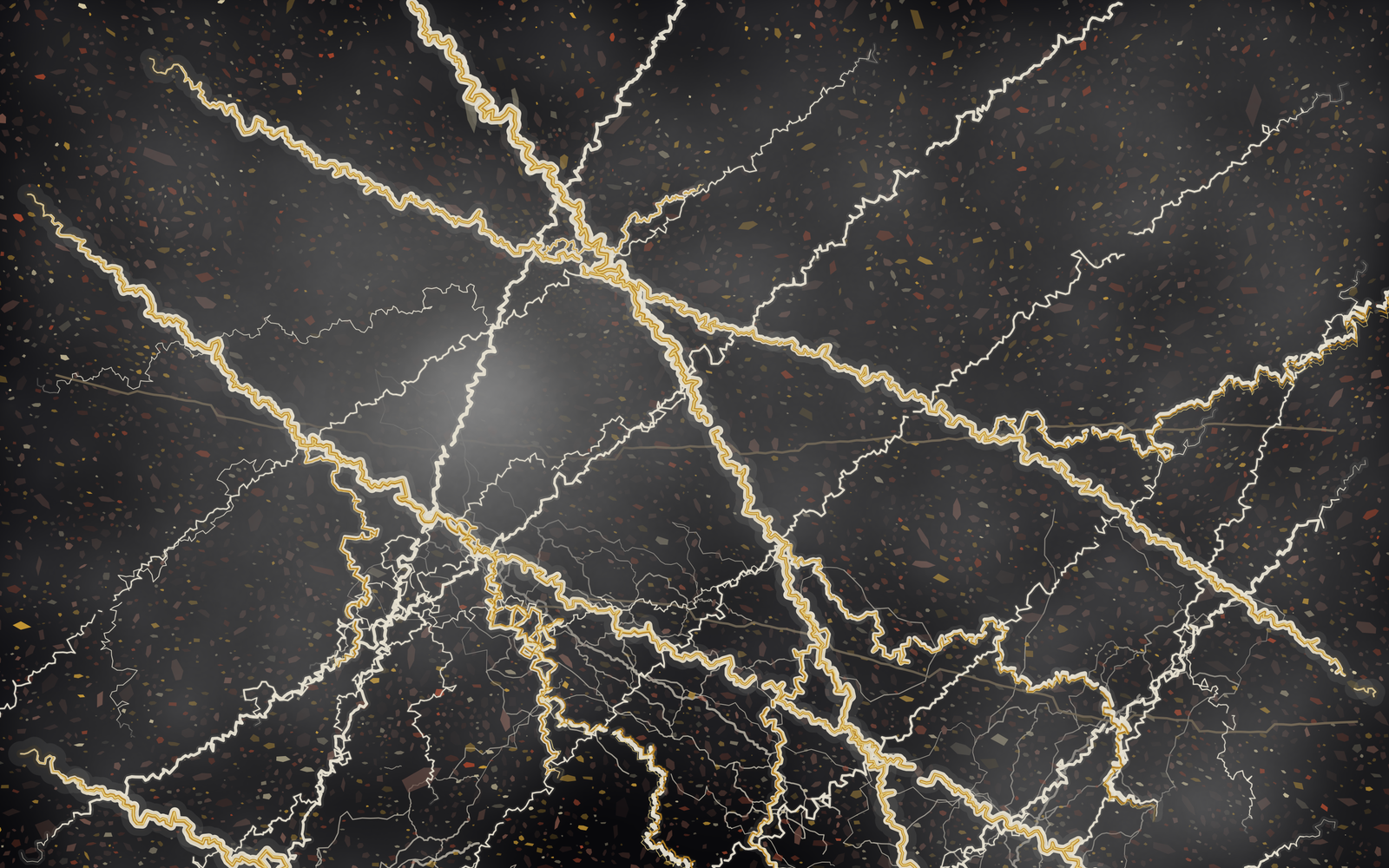
Daylight — 3.1 min, 1.18 GB
65,535 × 40,959 in 160 passes of 4096 — the small passes are what a real blur costs, at
sigma 141px.
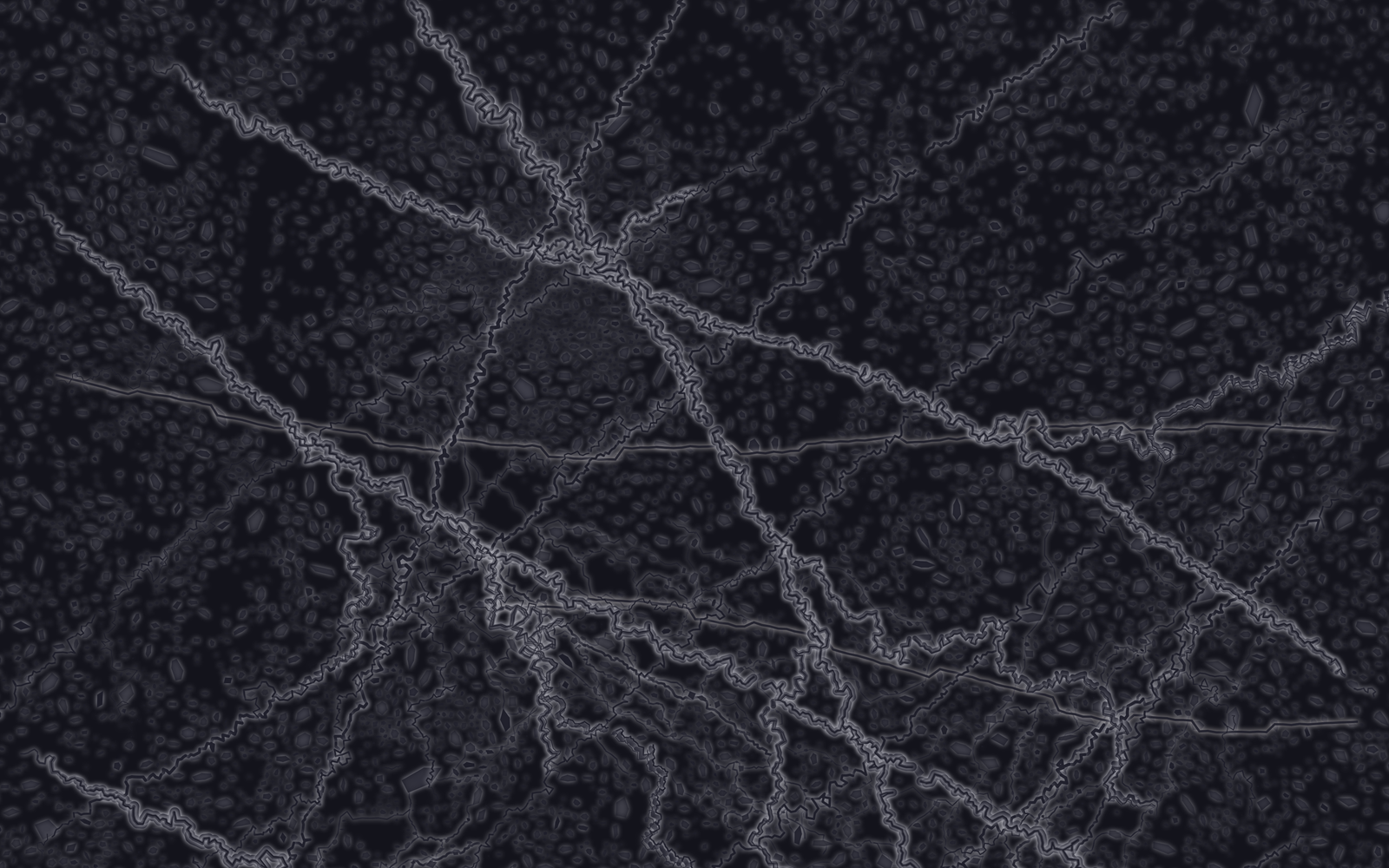
The other spectrum — 2.9 min, 460 MB
Structure without colour: every speck and vein in pale relief, and not one emitter. A psyker looking at ordinary stone sees ordinary stone.
The warped slab — the one the warp got into
The same two lights on the slab the heroes come from. Here the other spectrum has everything to say, and the protected window at the junction is rendered, not composited — ordinary daylight stone standing in the middle of the screaming, because the mask is a real mark in the slab. Put the burn on top of this one and you have the picture at the head of the page.
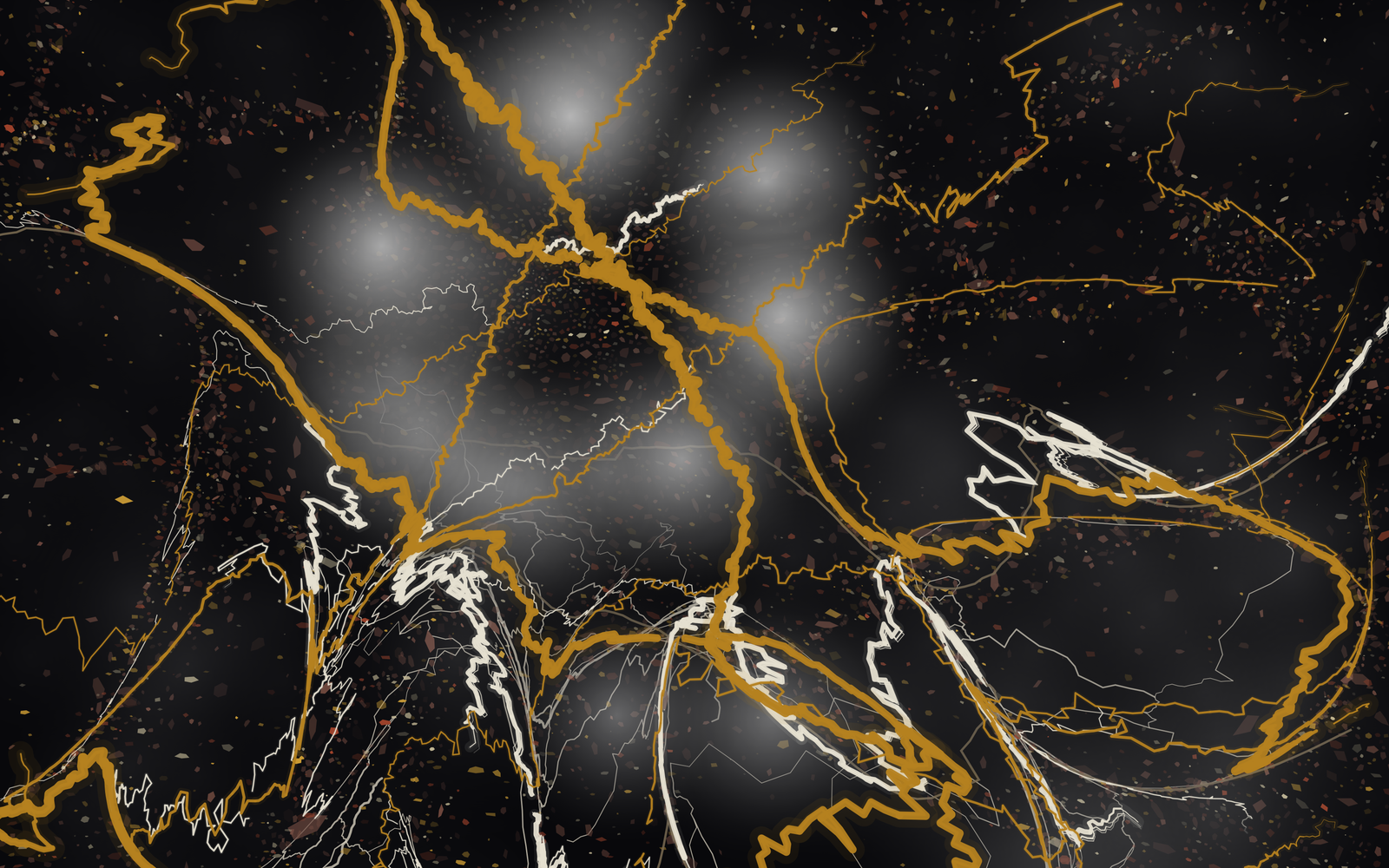
Daylight — 40.1 s, 285 MB
32,768 × 20,480 — a quarter of the pixels of the others, and the only one here not cut at 65,535.
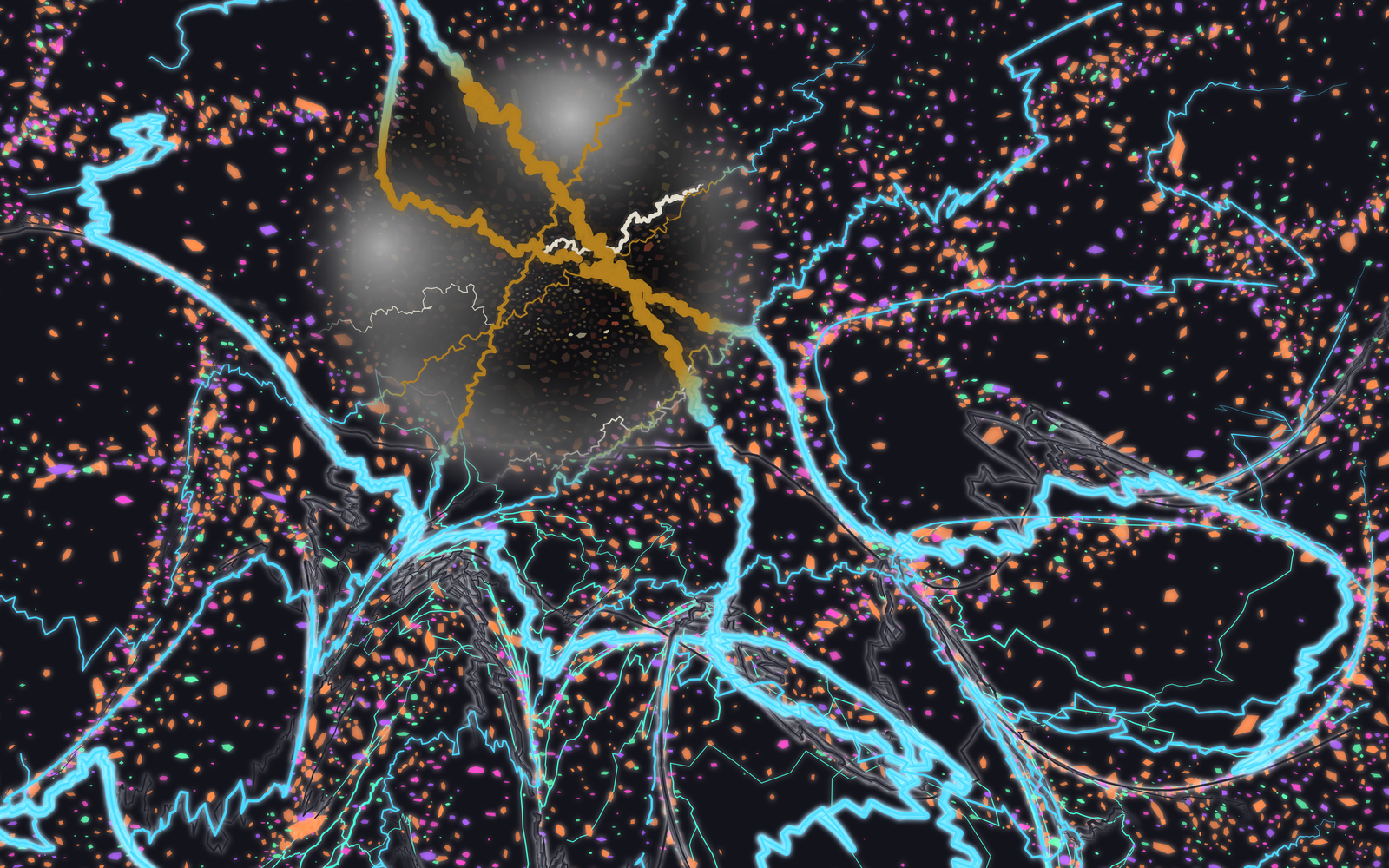
The other spectrum — 1.6 min, 780 MB
65,535 × 40,959 in 40 passes of 8192, blur-free — which is why it renders in half the time of the pristine slab at the same size.